
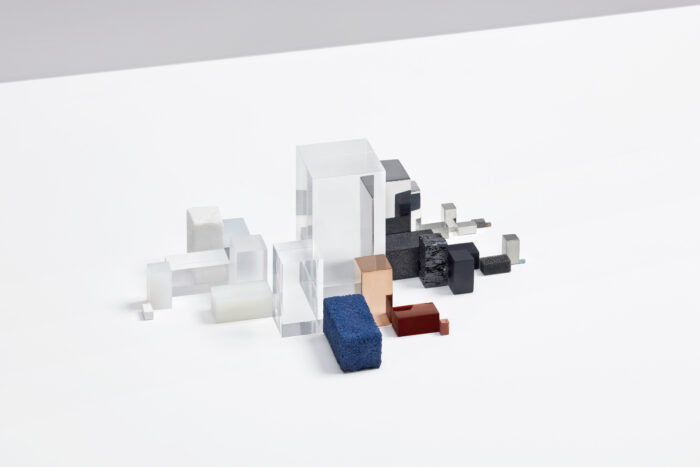
I had the great opportunity to ask few questions to the renown design duo Studio Drift about their exhibition “Materialism” which was part of Dutch Design Week 2019. The topic of DDW was “If not know ,then when ?” and Studio Drift were ambassadors of the event. I suggest, if you are more curious, to dive deeper into the concept of the project through this video : https://www.youtube.com/watchv=StrYqKCUAM4&ab_channel=StudioDRIFT
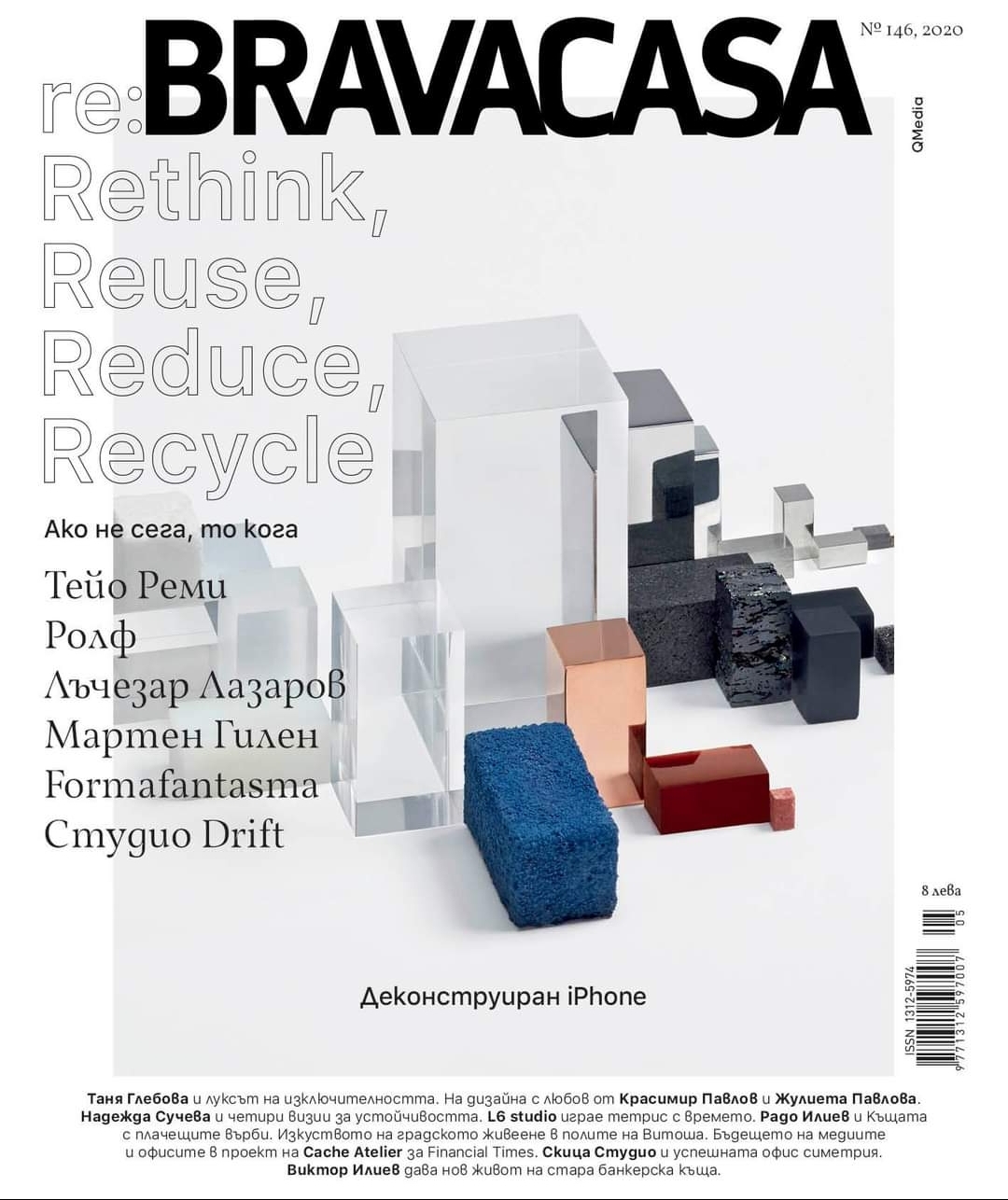
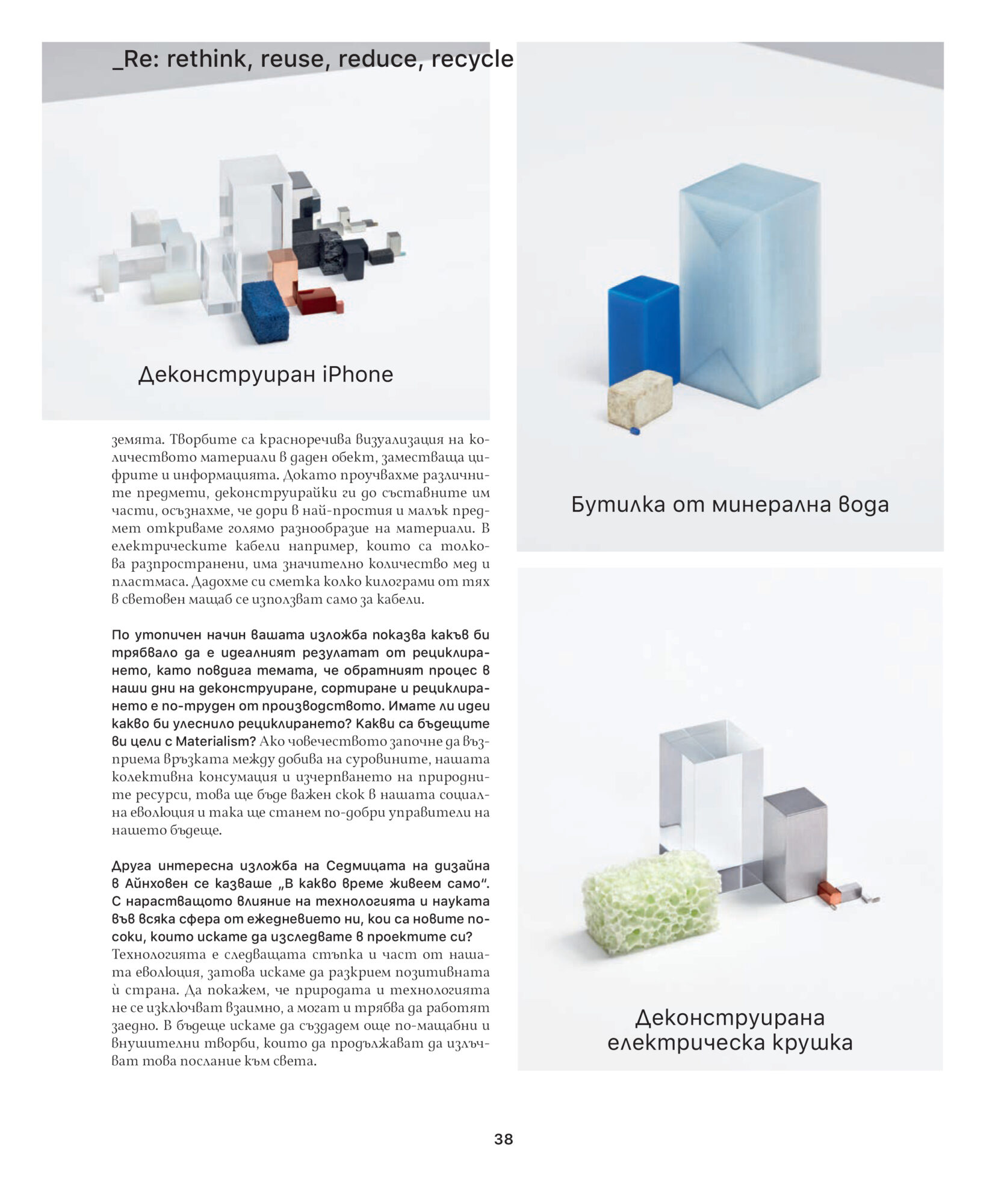
The interview was published in the last Bravacasa Bulgaria issue whose cover image was also from the exhibition. Here you can read the interview as it was published in Bulgarian:
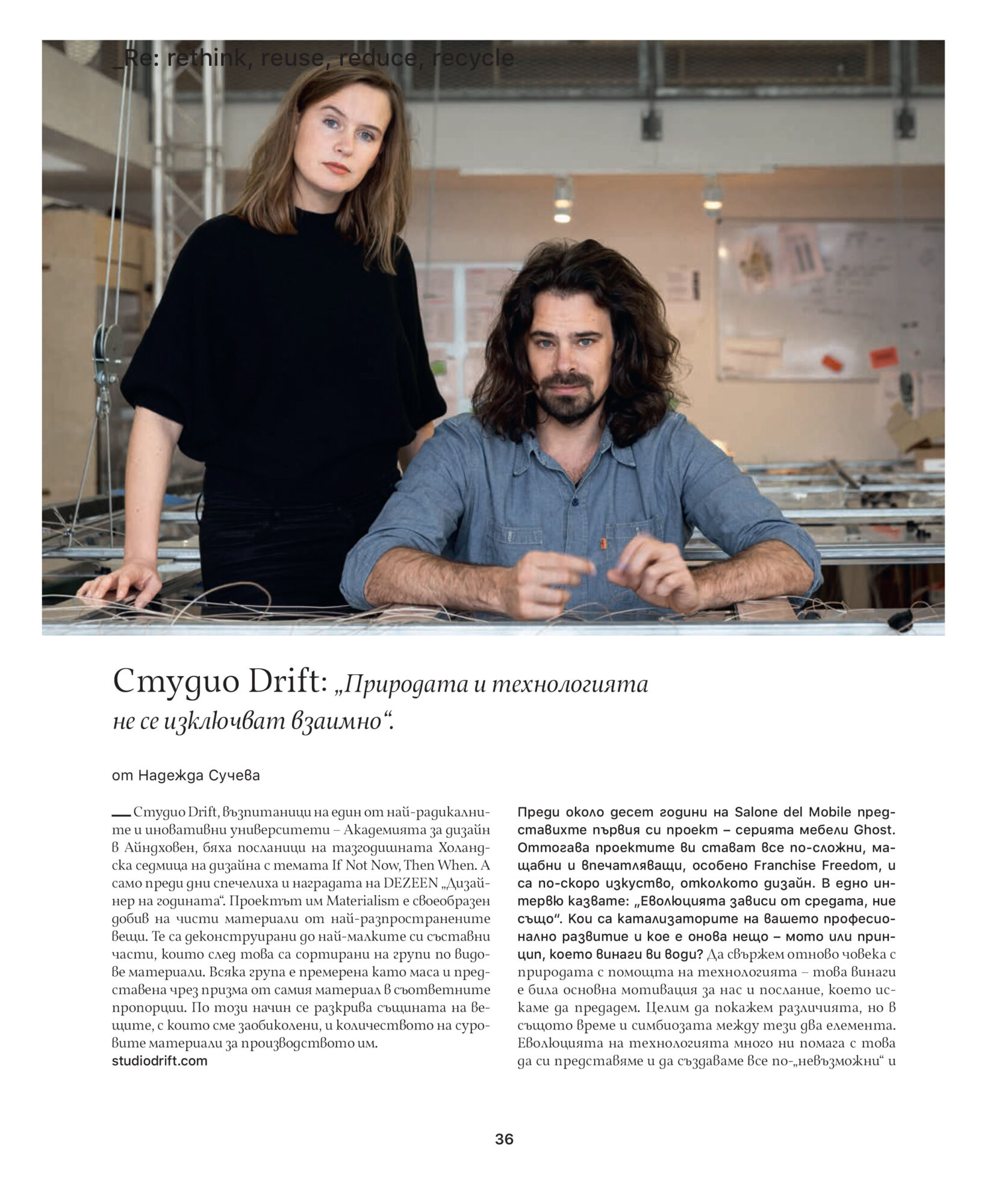
Here is the full interview in English, enjoy!
NS: I will start with a funny and personal coincidence-I met you for the first time 10 or more years ago at Salone del Mobile in Milan, where you were presenting your Ghost series furniture . Your latest projects are more elaborate and larger in scale in a way, especially Franchise Freedom, and have to do more with art rather than design. They are impressive and poetic pieces of art , presented or experienced all over the world. That started me thinking about the evolution of our ideas and goals as professionals but also about becoming more recognizable and influential. “The evolution is site specific and so are we,” you said in one of your interviews. So, what were the catalysts, circumstances that triggered your professional growth and change (and is DAE one of it)? But also what is the thing, something like a motto or a principle, that is always there to guide you through the realization of a project?
D : Re-connecting people with Nature using technology is the main message and vision that we aim to convey through all of our artworks. We want to portray the differences and yet symbiosis of those two elements together. The evolution of technology also allowed us to imagine and create more “impossible” and larger-scale artworks, such as Franchise Freedom as you mentioned.
NS: You both have graduated from the DAE, which is said to be one of the most radical and influential design universities across the world. Ten years later you are ambassadors of DDW 2019 whose topic was “If not now, then when”. DDW and DAE are interconnected, both envisioning and “prescribing“ in a way the future of the design. What were the important lessons and experiences gained from Eindhoven –from the university years and later as ambassadors and participants at the DDW? How do you refer to the concept of time and present moment in your work?
D: The academy allowed us to really learn and grow as artists. As the years passed, we applied the lessons and basics into our art and practice. Being ambassadors this year made us realize how much we evolved, and the journey we went through as artists. Regarding our works of art, they capture a specific moment in time and allow the viewers to experience it in their own way.
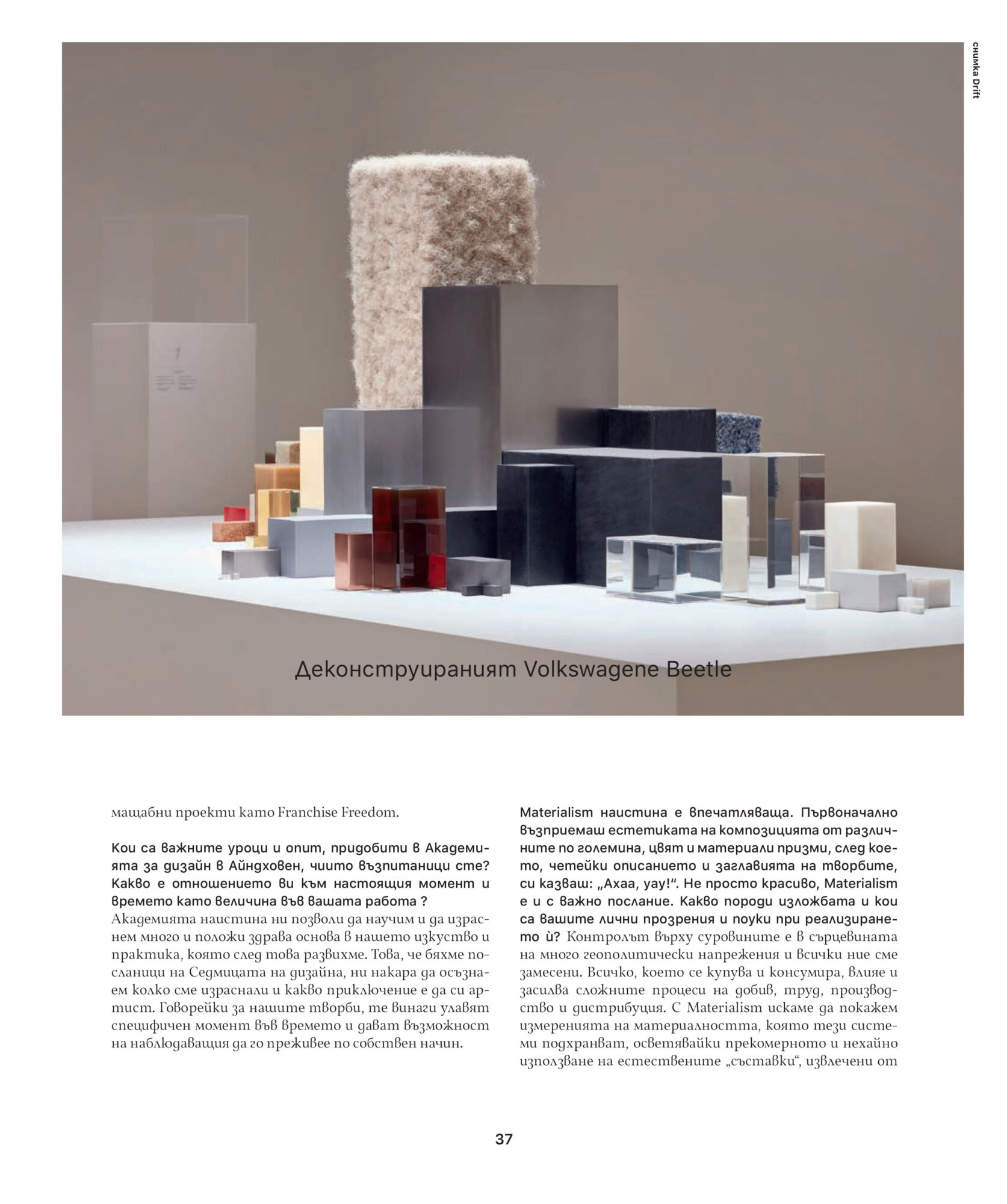
NS: I really loved the exhibition Materialism. At first glimpse you see the beautiful composition of arranged blocks different in size, color and material, and then, reading the description of the project and the titles of the sculptures you get this “Ahaaa,woll” effect – it is not mere esthetics, but an important message as well. So, what triggered the exhibition and tell us more about your personal insights and lessons gained out of its realization.
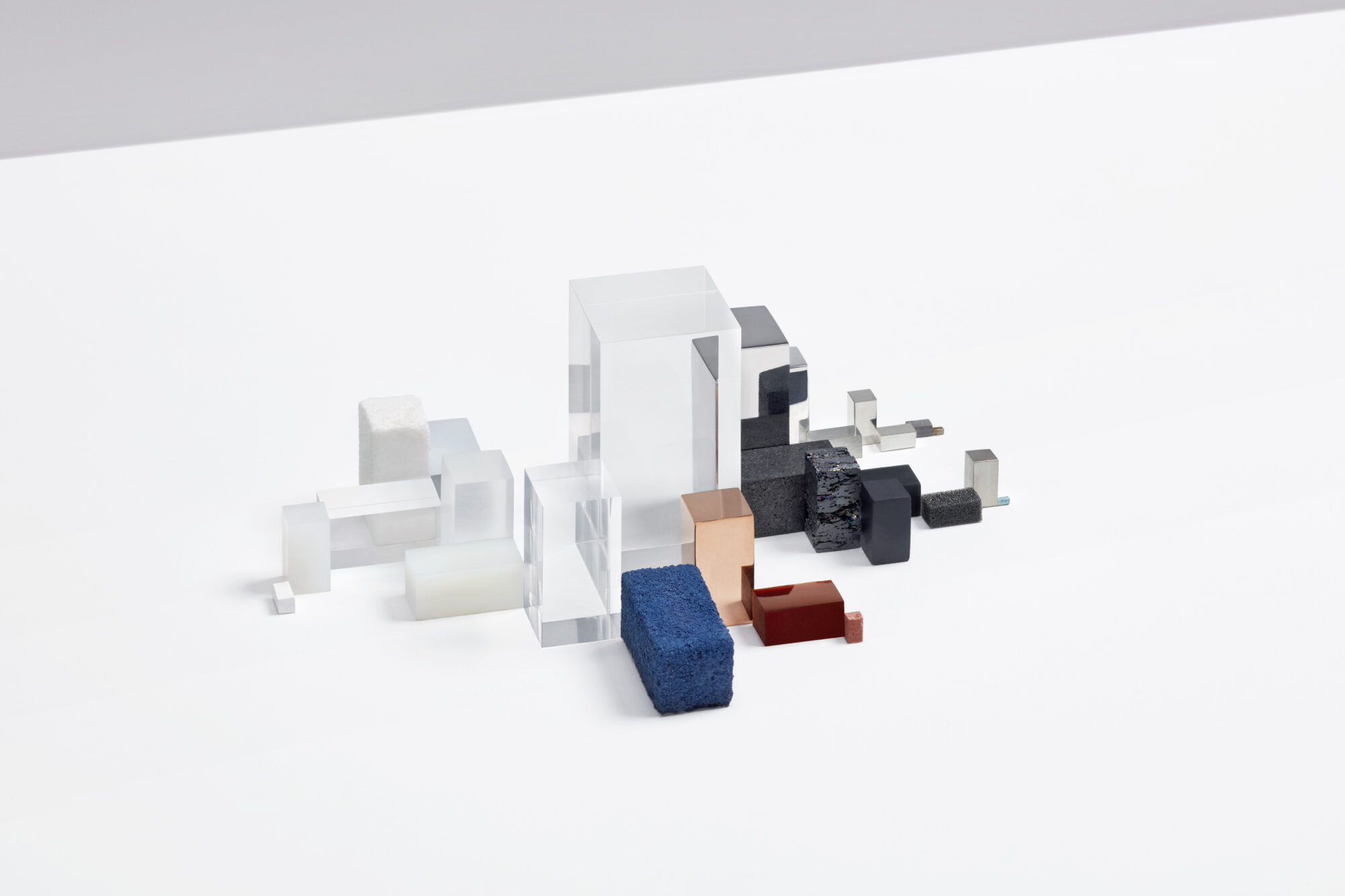
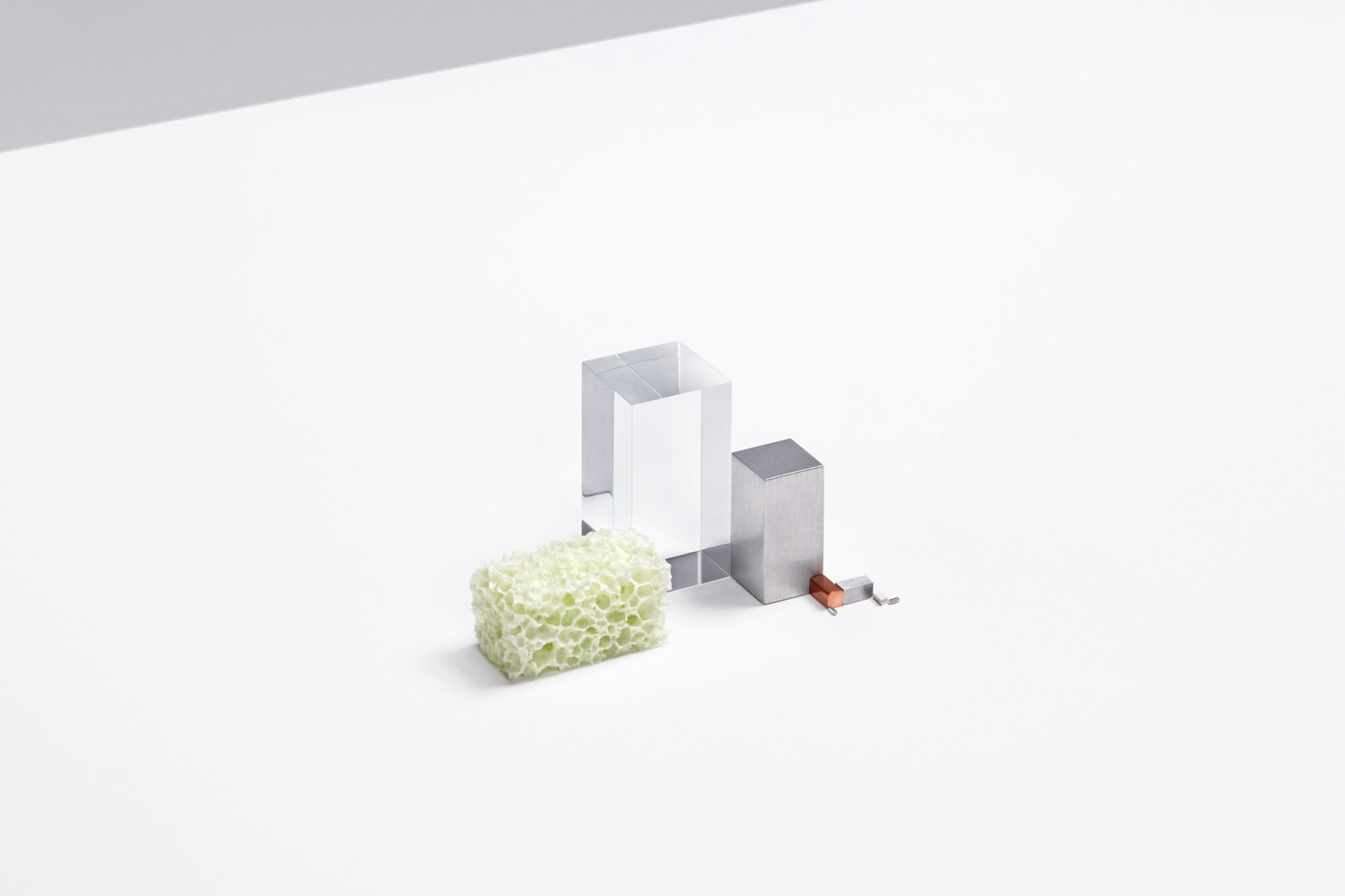
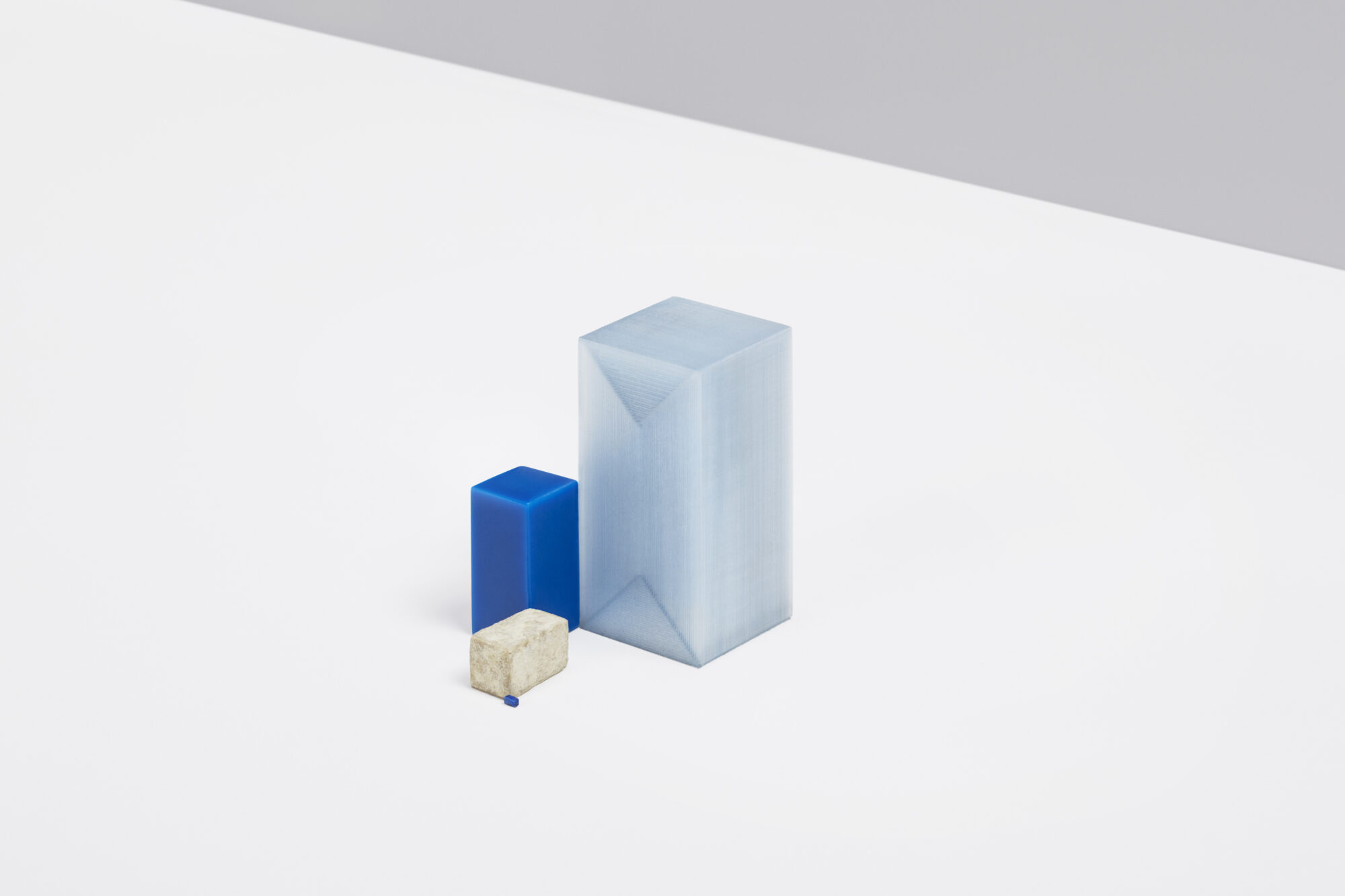
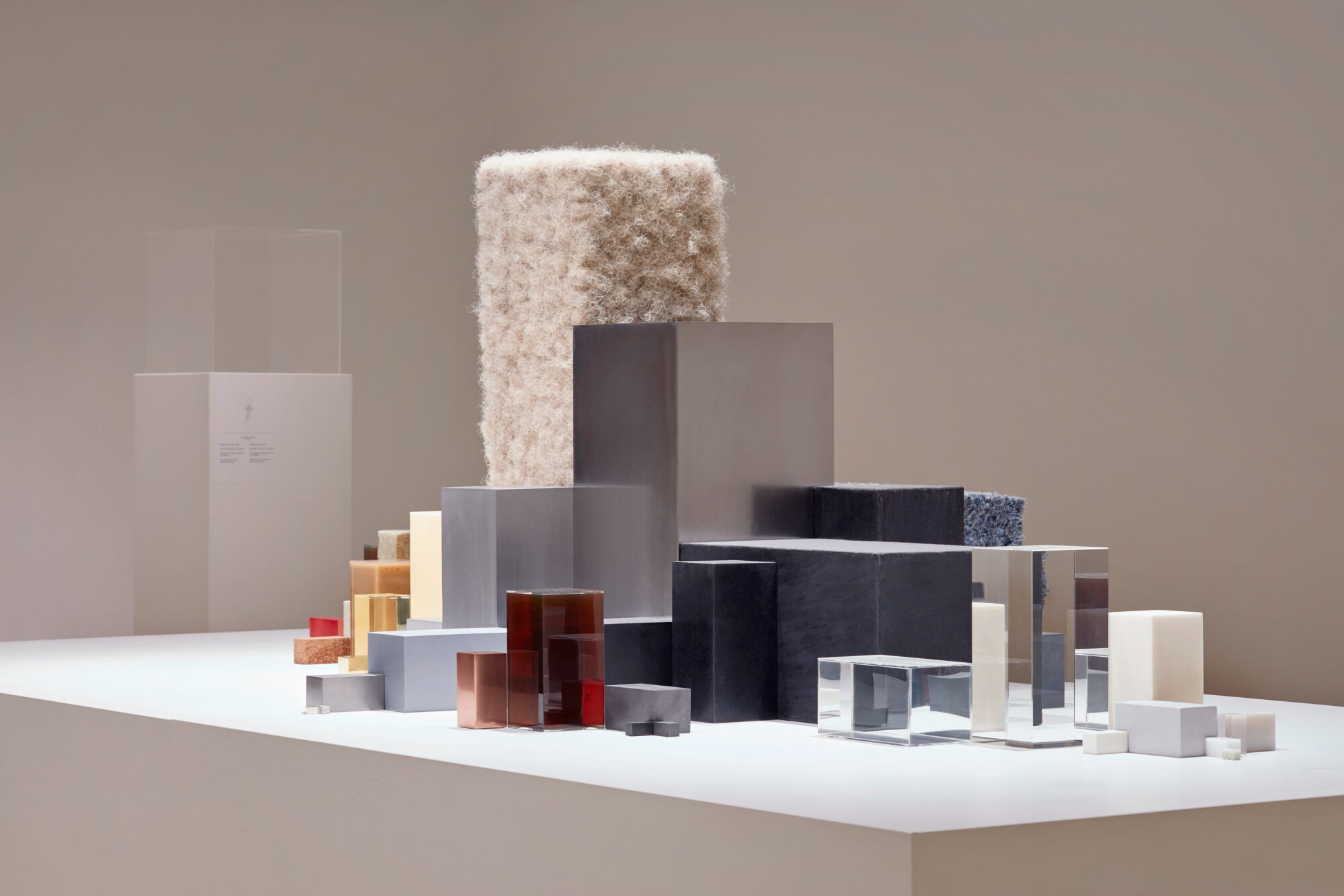
D: Control over raw materials is still at the heart of numerous geopolitical tensions and everyone is implicated. Everything that is bought and consumed has an impact, reinforcing complex systems of resource extraction, labor, manufacturing, and distribution. With Materialism, we want to reveal the dimensions of the materialism these systems feed, illuminating the excessive use of natural components extracted from the earth and used so carelessly. The works give an explicit visualisation of the amount of materials used for a single object rather than stating numbers and data. While researching about the different objects used and de-produced, we came to the realisation that even in singular and small objects can be found large amount of different materials. In electrical cables for instance, the significant amount of plastic and copper used in such a common and small object makes us wonder how many meters and kilograms of materials are used in our studio or more generally in the world.
NS: As you have explained in the description of the project, it is about deconstructing everyday objects to their original number and volume of materials and thus raising awareness of what actually we have taken away from nature to have these objects in our lives. We rarely, almost never ,ask ourselves how many resources and energy is put into the production of a single Iphone or a plastic bottle for example, or where their materials come from. Obviously, it is a long chain of processes. But also, isn’t it a long chain of processes, energy and time consumption to get that object deconstructed to the smallest piece, sort and recycle all input materials -maybe it is even harder? In a way your exhibition is presenting what the ultimate result of recycling should be like, which is utopic in a way. Do you have any thoughts or concepts on how changing the production process can facilitate the reversive recycling process? What the evolution of your project Materialism will be?
D: If humankind could somehow perceive this connection to materials, to our collective consumption and the earth it impoverishes, it would be a leap in our social evolution, in building an awareness that we must somehow become better stewards of our future.
NS: There was another interesting exhibition at DDW named “What a Time to Be Alive” and having in mind the increasing presence of technology and science in our lives what are the new directions and goals you want to investigate and work on?
D: We are undoubtedly moving forward with technology. We really think that technology is the next step and part of our evolution, we thus want to present a positive vision of it. Showing that Nature and technology are not exclusive but can work together. In the future, we want to create more impactful and larger scale installations and artworks to continue conveying this message to the world.