
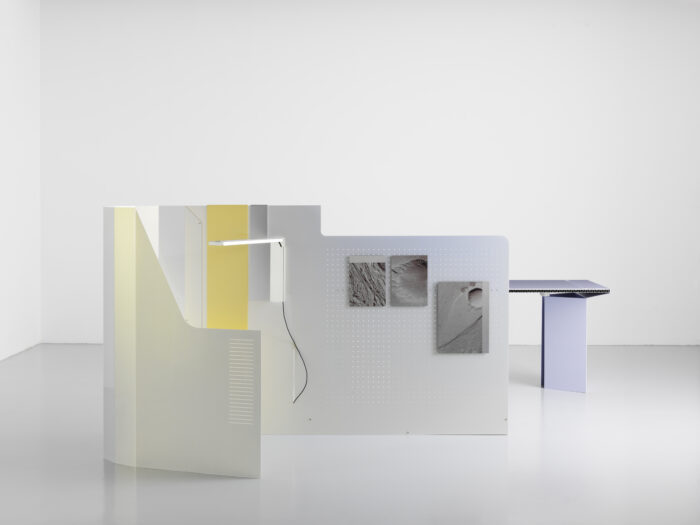
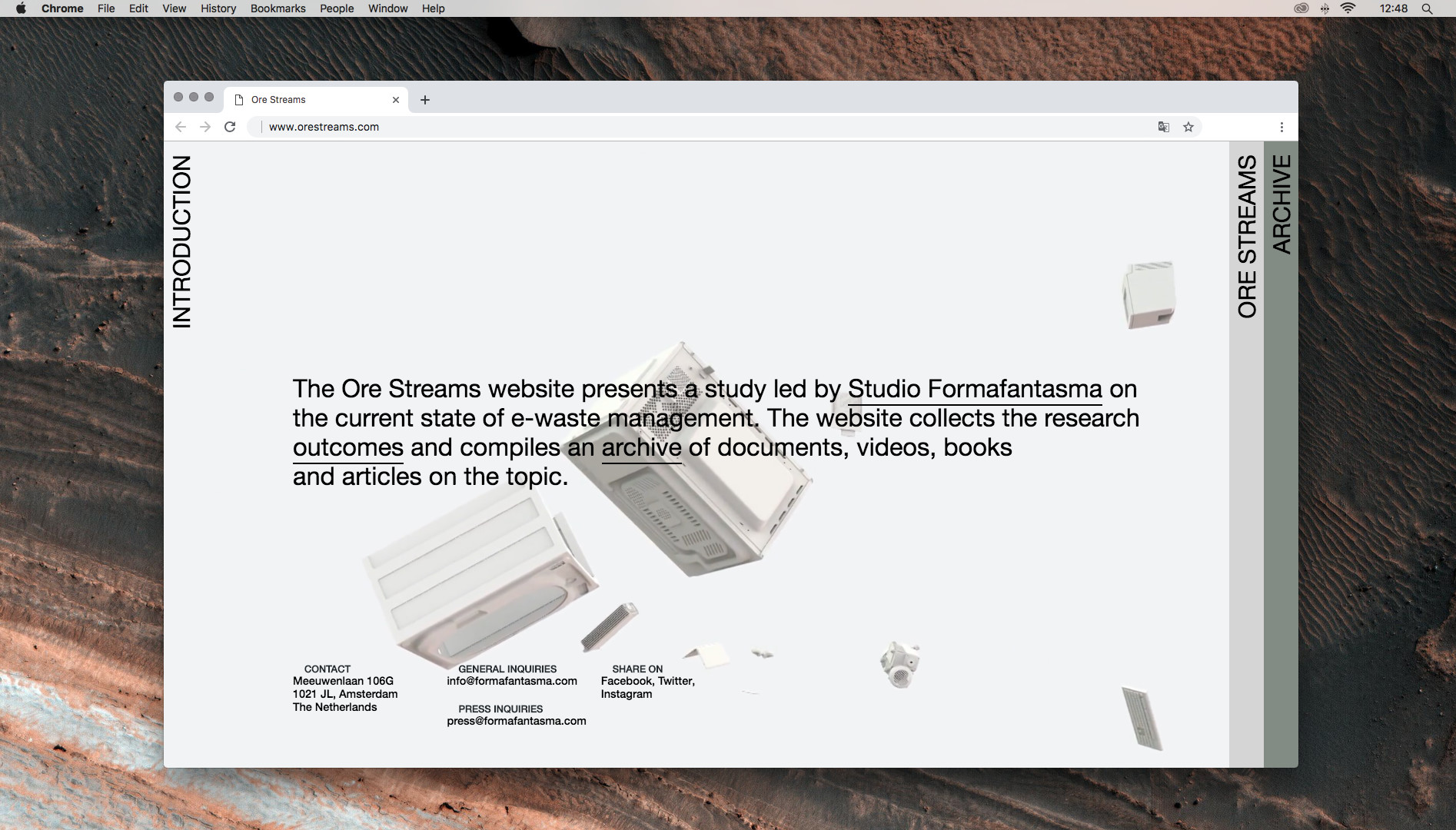
In the end of 2019 I had the opportunity to interview the design duo Formafantasma on their exhibition Ore Streams which was part of the XXII Triennale ‘Broken Nature’ curated by Paola Antonelli (senior curator of Architecture and Design at MoMA in NY) . The exhibition is really significant and I recommend you to go check in depth its texts and videos on the official site here : https://formafantasma.com/work/ore-streams
Here is the interview , published in the last issue of BRAVACASA Bulgaria from February 2020
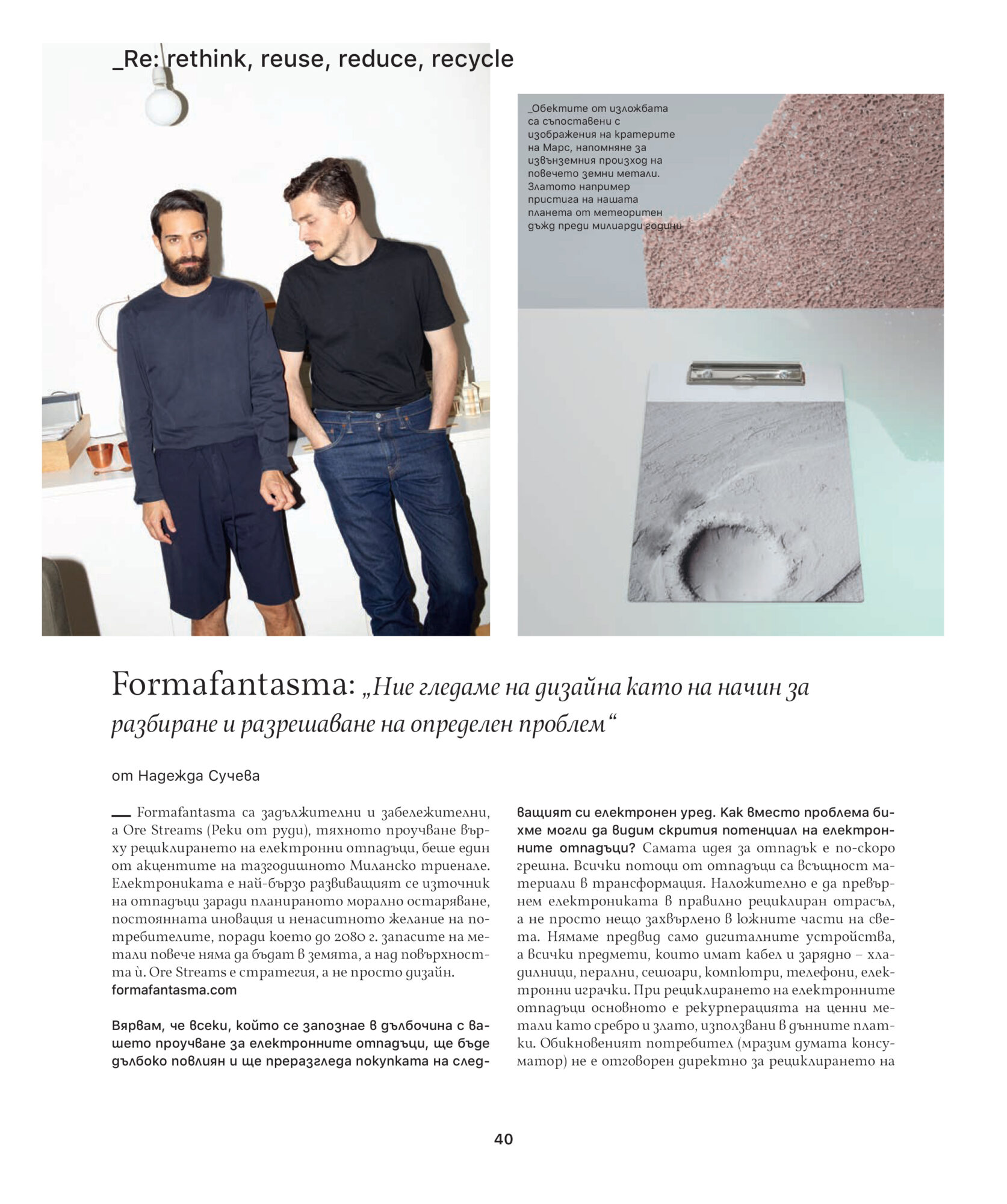
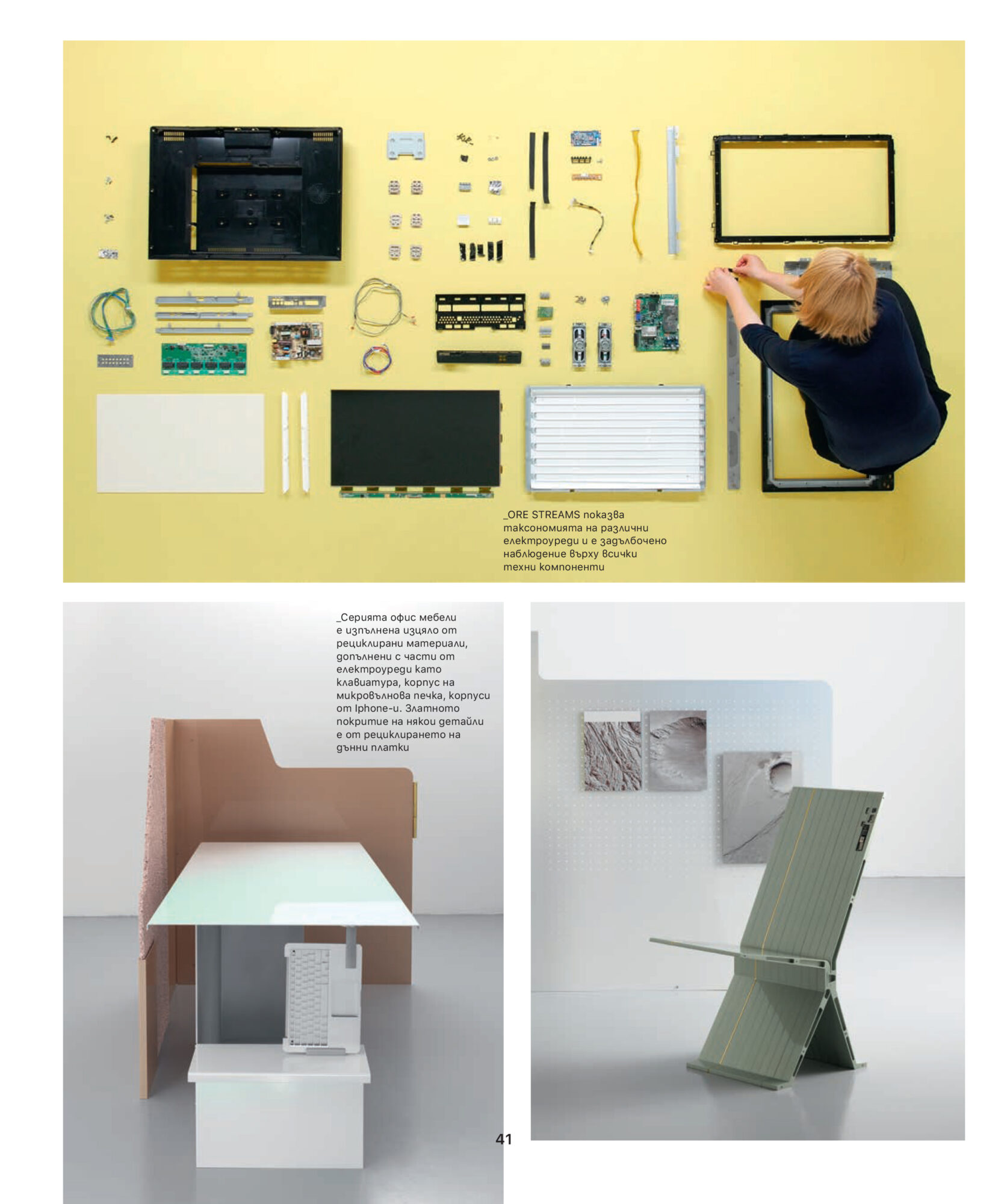
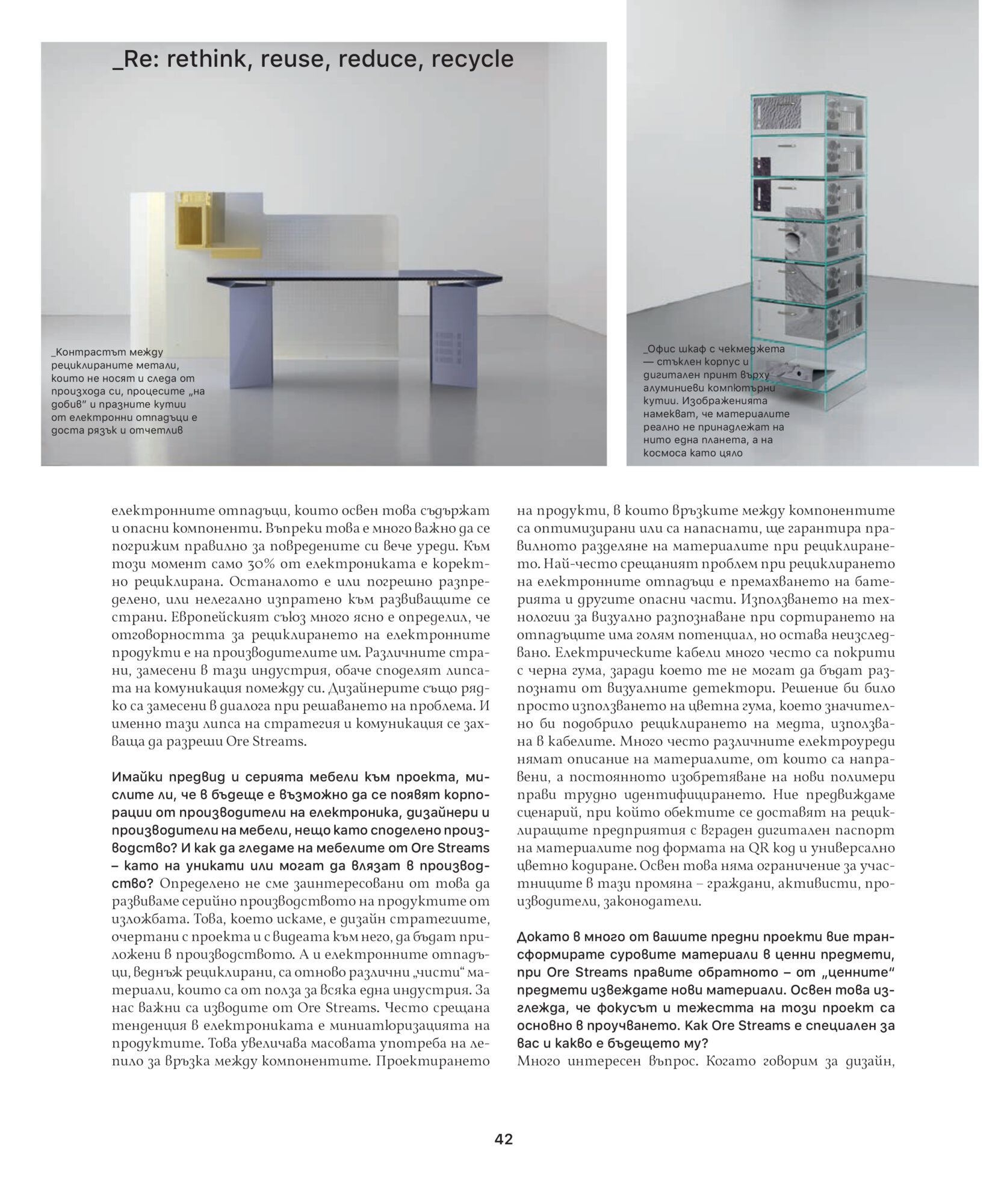
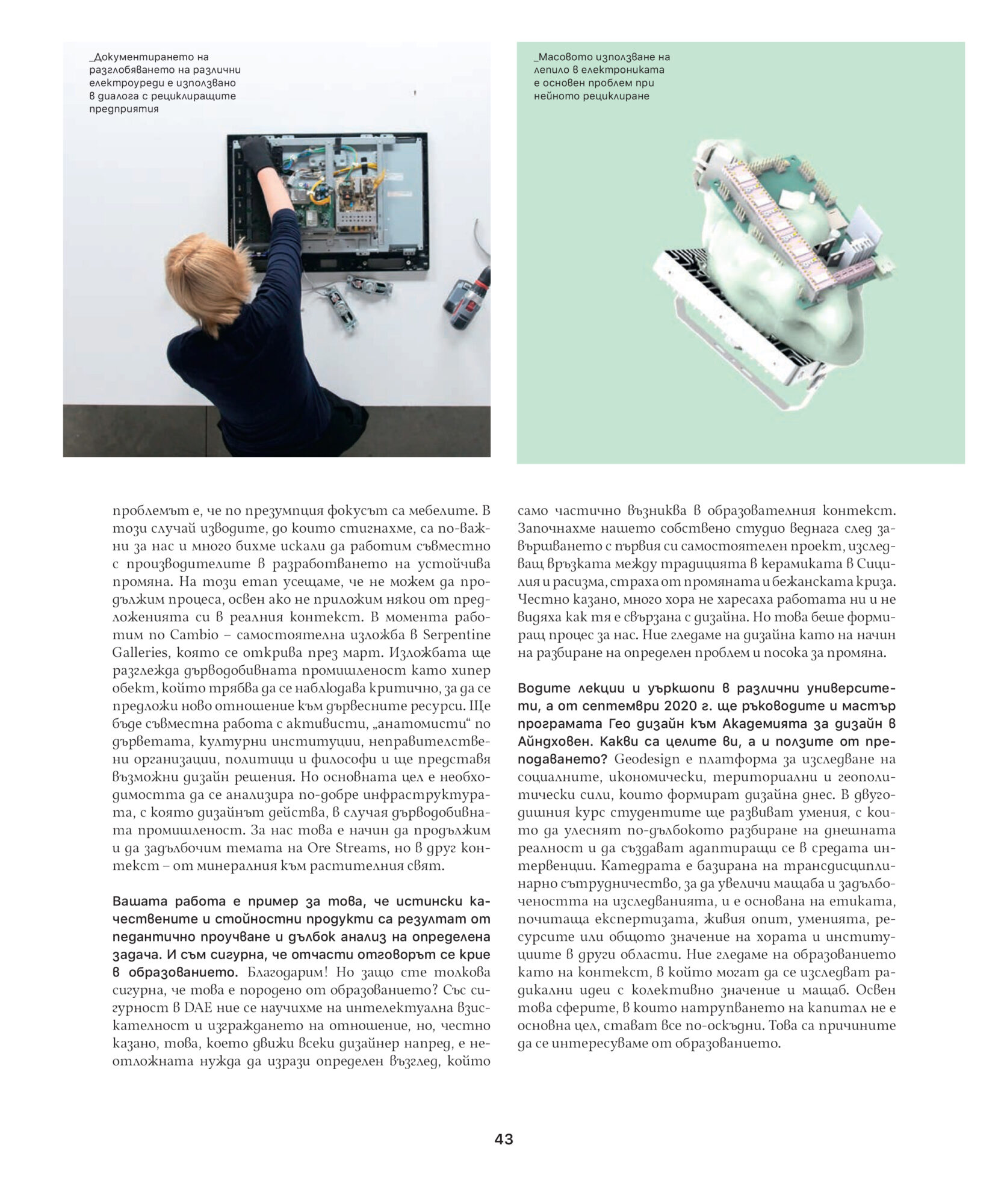
And here is the full interview in English with Simone Farresin with some images provided by Formafantasma:
NS: I believe that everybody who has read the description of Ore Streams and watched the videos accompanying the project is highly affected and is looking at the electronic waste in a new way. The planned obsolescence, the mass production and the insatiable desire of the consumers, as stated in the research, are causing it to be the fastest growing waste sector on Earth. And the recycling process is yet complicated and hazardous. But instead of looking at the e-waste only as a problem that needs a resolution and awareness, how will you describe and promote the hidden potential of e-waste in general?
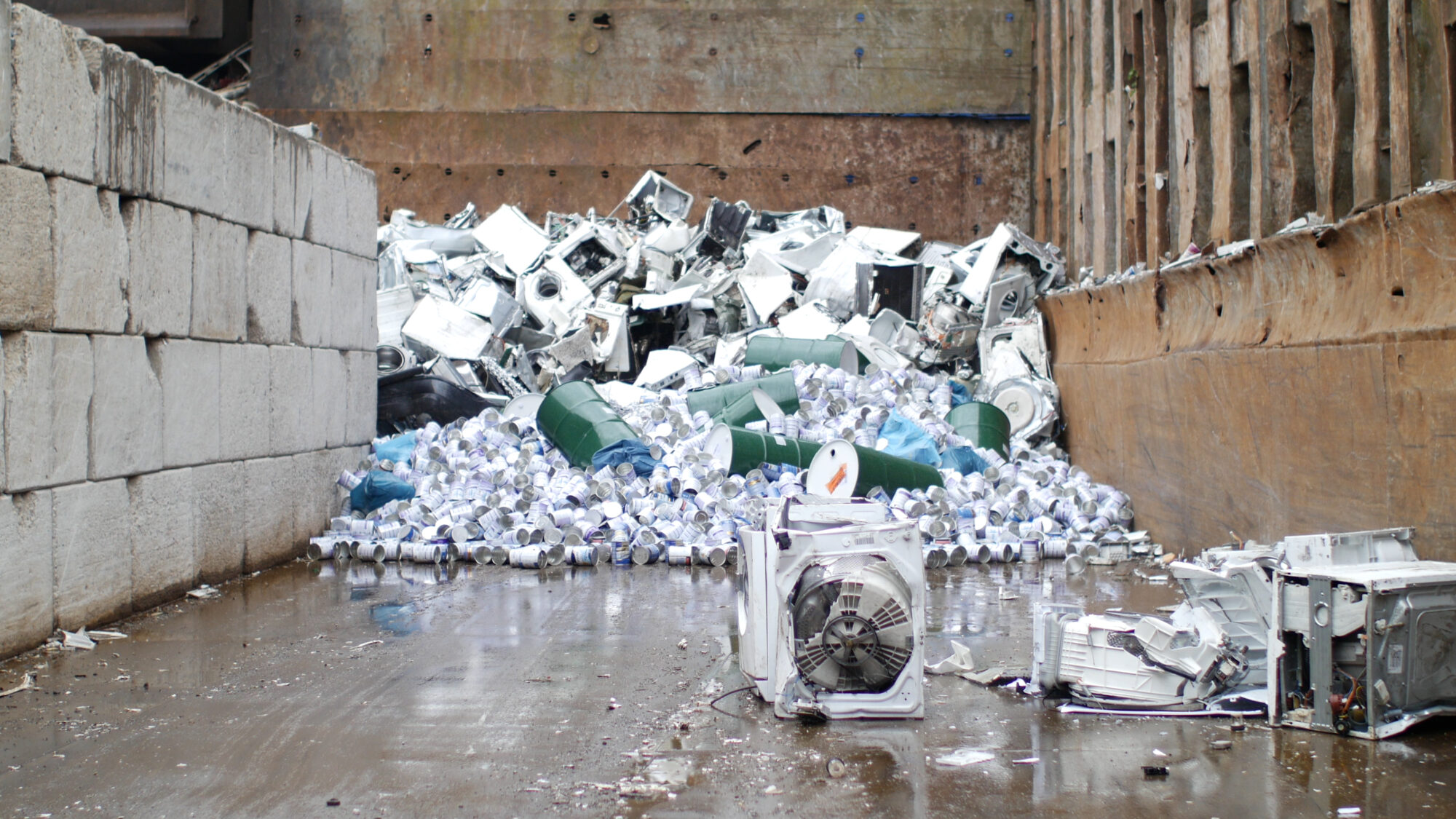
SF : E-waste as any other waste stream is full of potential. The idea of waste in itself is somehow wrong. All waste streams are in fact materials in transformation. From electronics we can recuperate aluminium, plastics, gold etc. On the other side the urgency is to make sure electronics are properly recycled and not just dumped on the south of the world.
First we should also clarify that when we talk about electronic waste we don’t mean only digital tools but also all those objects that simply has a electric cable or a battery. In this sense electronic waste ranges form fridges, washing machines, hair dryers, electric toys, computers, phones etc.
The main driving force behind the recycling of e-waste is the recuperation of precious metals used in circuit boards, like silver and gold.
The singular user (we hate the word consumer) is not responsible for the direct recycling of electronic waste since these objects contains hazardous components that must be handled by professionals. Nevertheless what is very important is to make sure to deliver broken electronics or to the producers or to collection centers in the city. At this moment only the 30% of electronics is correctly recycled while the rest or ends up in the wrong recycling facilities or illegally exported in developing countries.
What the majority of people don’t know is the the European Union clearly legislated on the responsibility of e-waste recycling and that is on the producers. The producers should be responsible for the collection of broken electronics.
Speaking with different practitioners involved in this industry like recyclers, policy makers and activists they all mentioned a lack of conversation between all the different parts. Designers are also not often involved when developing policies. This lack of conversation and shared knowledge is the problem. Ore streams tackle this.
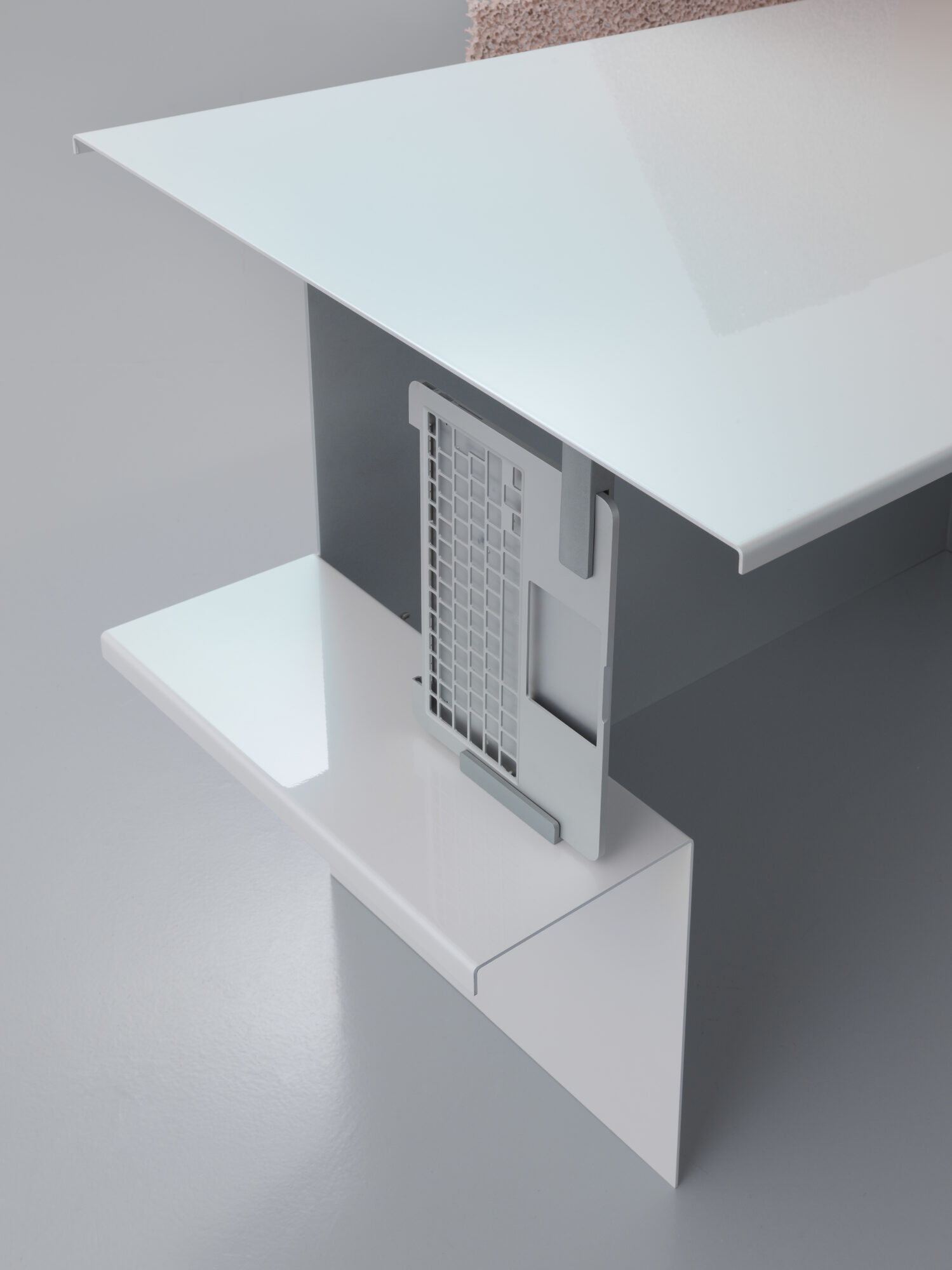
NS: You state that producers of electronics need to take charge of the e-waste of their disposed products and that the designers will play important role in finding the better solutions to ease not only the production but the recycling process as well. And let’s take that concept further –do you think that something like a combined industry is possible –corporations of electronics producers, designers and furniture manufacturers working together and sharing the same raw and recycled materials for their products? Are the final products of Ore Stream unique pieces of furniture or they can get into production eventually, or that was not the point?
We are not sure this would be interesting. E-waste is not a material but a series of product typologies. Once recycled the outcome are different streams of materials such as aluminium, gold, plastic etc. In this sense the outcome of any recycling process is relevant for any industry because what you obtain are raw materials. The reality is that recycled materials are everywhere. In fact as you are suggesting we are not really interested in producing the furniture of ore streams on a larger scale. What we wish is that the design strategies we outlined with one of the videos we produced would be applied for production!
The concepts displayed are conceived considering the recycling technologies now in place and the limitations of facilities across developed and developing countries.
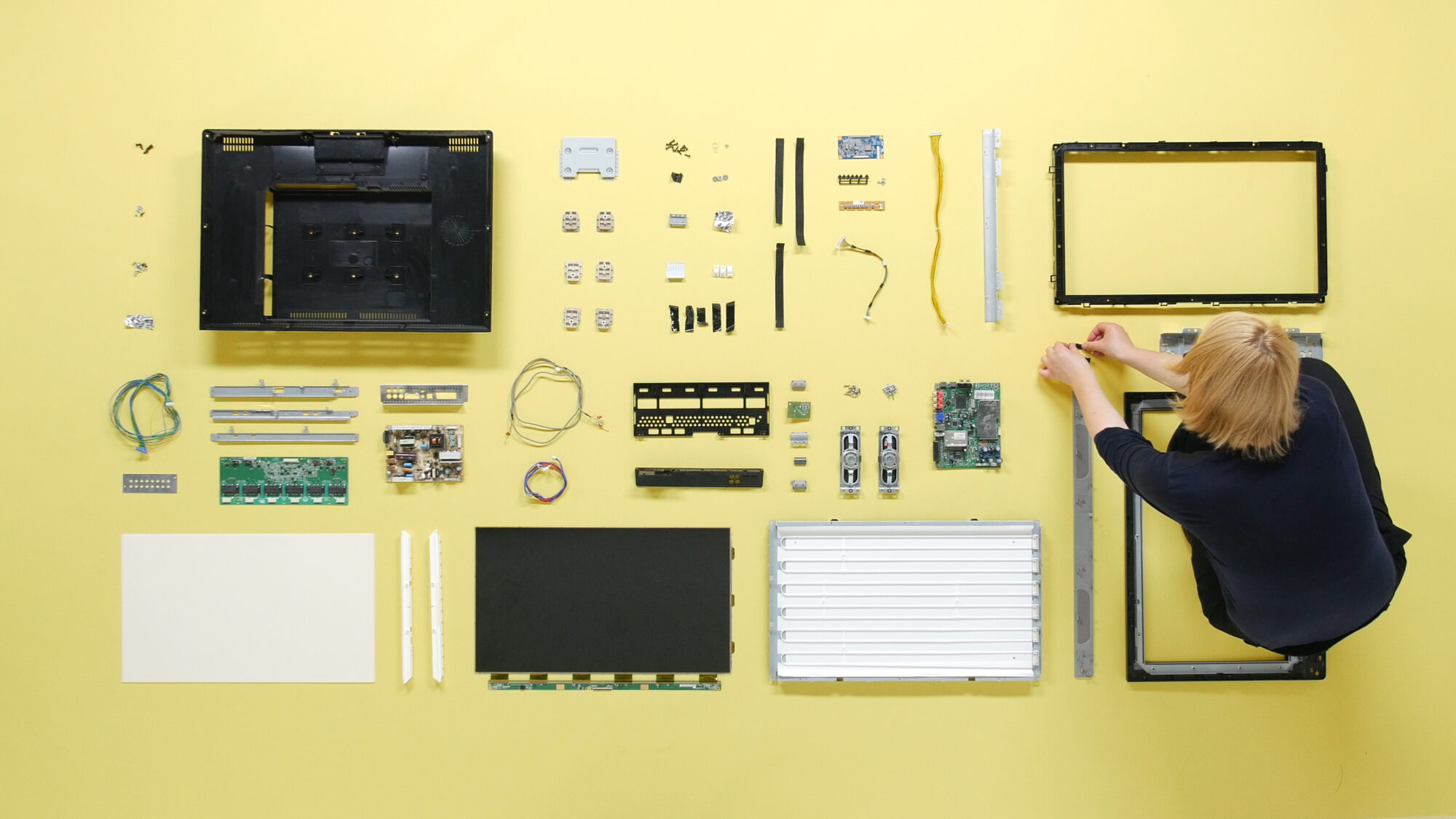
I’ll give you some examples: A common trend in electronics is the miniaturization of products. This has increased the already wide-spread use of glue to attach components in order to save space. Designing objects with space efficient connections/clamping systems will guarantee precise separation of materials; The most common problem for both recycling in developed and developing countries, is removal of batteries and hazardous components. The use of visual recognition technologies in the sorting of waste has great potential but remains unexplored. Electric cables are very commonly covered in black rubber. Yet, due to the dark colour and opacity of the surface, they are not recognised by visual detectors. A simple design choice such as using coloured rubber or even a patterned surface, could dramatically improve the recycling of the copper used in electric cables; Too often e-waste objects are not labeled with information about their materiality. Constant development of new polymers makes it difficult to identify materials and separate them precisely. In developing countries, rudimentary and oft toxic methods are used to determine what a material is, for instance burning is used to understand the composition of a material based on how it melts and the colour of the flames. As a response we envision a scenario in which objects would be delivered to recyclers with an embedded digital material passport in the form of a QR code and universal colour coding.
As we mentioned before the audience could potentially be as wide as possible. Citizens that are interested in knowing more about electronics and their production but also producers, policy makers and recyclers. Nevertheless we are aware the biggest impact will be in the design community.
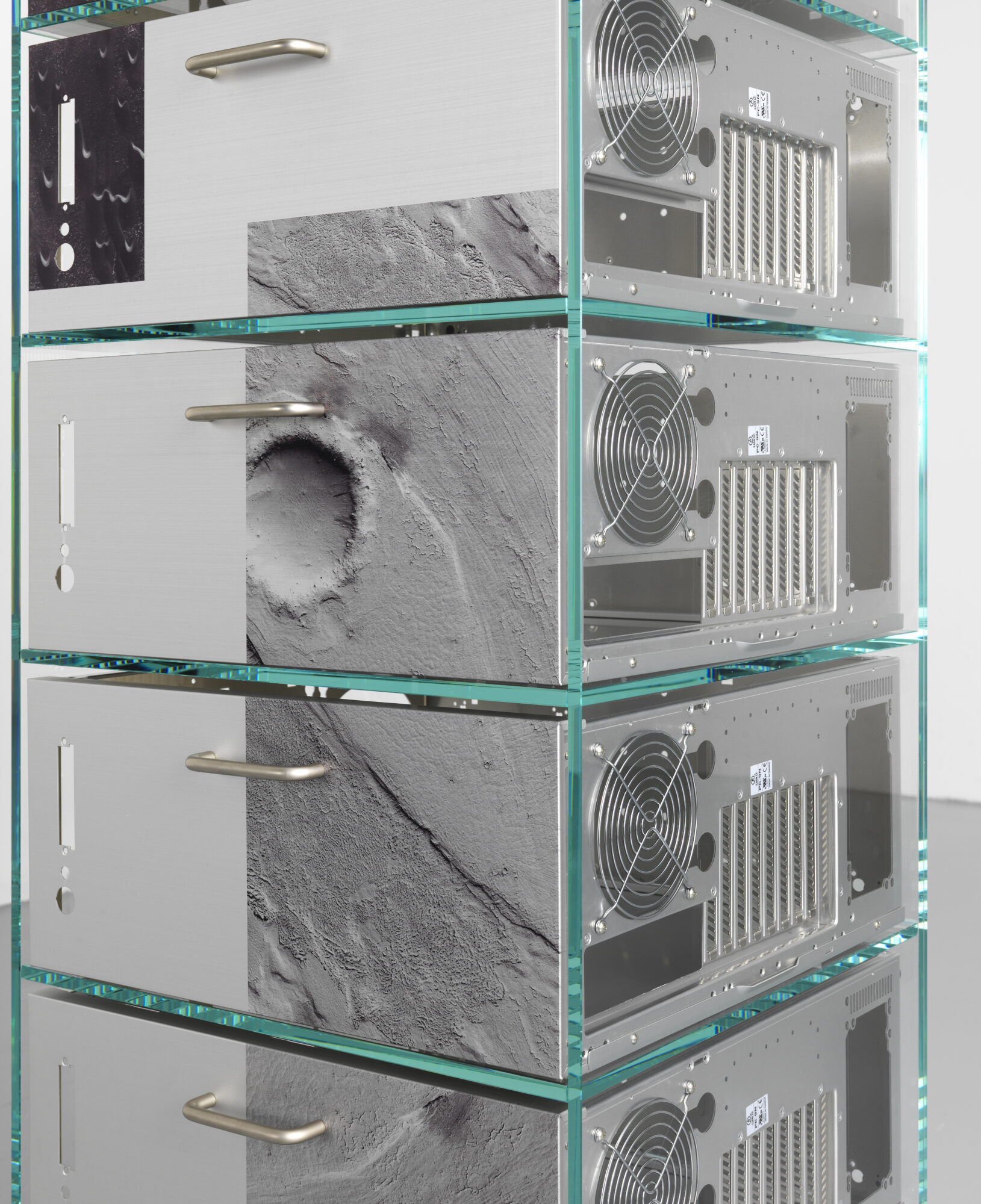
NS While in many of your previous works like De Natura Fossilium, Botanica, Domestica you transform the raw materials into precious goods, your latest project Ore Streams represents actually kind of opposite -how from the former “precious goods” raw materials can be extracted. What is more, it seems that in this particular project the focus on the research and the conclusions, published online at orestreams.com along with all the data resources, is more important than the final result which is the furniture. How is Ore Streams special in your portfolio and what are your brave dreams for its development? Are there any news regarding it?
SF : Very interesting question. In fact the final outcome are not the furnitures. The problem is that somehow when talking about design everyone feels the objects are more important for instance then the animation we explained in the previous question. Honestly we would love to be working with a electronic producer for their sustainable development. We feel we can not really go further unless applying some of the research we did in a real context. Despite it is not related to Ore Streams at the moment we are working on Cambio a solo exhibition at Serpentine Galleries opening in March*. The exhibition will look into the timber industry as a hyperobject that needs to be critically observed in order to propose new ways of interacting with arboreal resources. the exhibition will be a collaborative effort and will include contributions from activists, wood anatomists, cultural institutions, NGO, policy makers and a philosopher. While the exhibition will provide possible design briefs its scope and intention is to open up the conversation about design and the necessity to understand much better the infrastructure upon which design performs, in this case the timber industry. For us this a way to extend and to deepening the thinking of Ore Streams but in another context, from the mineral to the vegetal world.
NS: I am a huge fan of your work and design approach as it is an example that the truly valuable and exquisite final product is always prеceded by meticulous and in-depth survey and analysis of particular problem or task. And I am pretty sure that it is a matter of education. Is that something you gained and developed during your studies at DAE? What were the other primal principles that established the basis of your practice 10 years ago?
SF : Thanks! But why are you so sure that is a matter of education? For sure at DAE we learned intellectual rigour but honestly what drives any designer forward is the urgency of a vision that can only be helped to emerge in a educational context. We for sure have been helped in sharpening a attitude. When we started with our own studio was immediately after our graduation work. It was a reflection on the relation between the tradition of ceramic in Sicily and how this links to racism, the fear for change and the refugee crisis. Honestly back then a lot of people hated the work and they could not see how it relates to design. Nevertheless that was a formative process. The understanding of design and objects as a vector to understand and eventually propose change is and was what moves us.
NS : You are also lecturing and heading workshops in various Universities and Institutions. And from September 2020 you will be the head of the new GEO-DESIGN Master at the Design Academy Eindhoven. What are the goals and values of teaching for you?
SF : Maybe we should first explain what the GEO-DESIGN master is going to be about. GEO-DESIGN is a platform to explore the social, economic, territorial, and geopolitical forces shaping design today. In the two-year master’s course, students will develop research and communication tools to facilitate a deeper understanding of today’s reality and to make transformative interventions through design and its material, technical, social, and discursive possibilities. The department GEO—DESIGN within the Master’s course acknowledges the legacy of industrial production as the fundamental source for the expertise and agency of the designer, whilst at the same time problematizing and addressing industrial production’s historic contribution to environmental and social instability and its incompatibility with models of sustainable or even survivable futures. The department will be embedded in trans-disciplinary collaboration to increase the scale and depth of the research, but also to take an ethical position that respects the expertise, lived experience, skills, resources, or communal significance of individuals and institutions in other fields.
We see education as the context were radical ideas can be tested. The spaces were thinking beyond capital accumulation are becoming more and more scarce. Education is also the environment were we can explore ideas on a collective scale. These are the reasons why we are interested in education.
*The exhibition Cambio was supposed to be held from March 2020 to September 2020, but due to Covid restrictions, the schedule was changed. Nevertheless, I managed to visit the opening in the beginning of March 2020 right before everything was closed and another article with pictures and texts is on the way…